
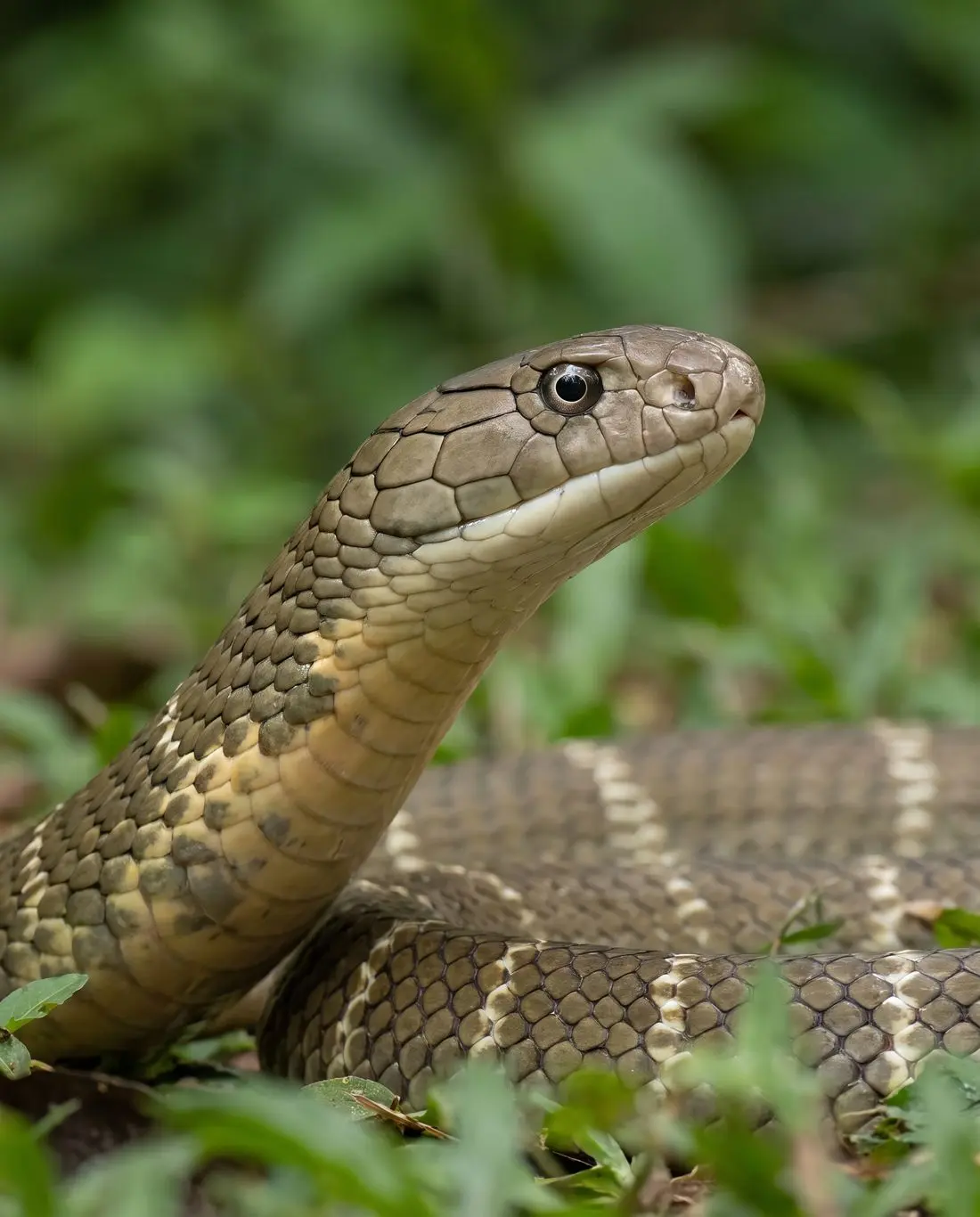
The king cobra is the longest venomous snake in the world and a rare snake in Singapore. In 2024 scientists split the king cobra into four species, and the one found in Singapore is now the Sunda king cobra, Ophiophagus bungarus. It feeds mainly on other snakes.
How to recognise it
This is a very long, fairly slender snake. Adults are brownish-yellow, olive-brown or dark brown. Most large adults are plain, but some keep narrow pale bands. The throat is paler and blends into the body colour without a sharp line. The best clue is the head: the top is covered in large shields, each edged in black.
When alarmed it can raise the front of its body high off the ground and spread a hood that is long and narrow rather than wide. Young king cobras look quite different from adults. They are dark with many thin, evenly spaced pale yellow bands.
Where it lives in Singapore
Records go back to 1847, and most come from in and around the Central Catchment Nature Reserve, including MacRitchie, Upper Peirce and Mandai. It has also been seen around Bukit Timah, at Windsor Nature Park and in the mangroves of Sungei Buloh.
It is a strong swimmer. In Singapore it has been watched swimming in reservoirs and quarry lakes, including Upper Peirce Reservoir and Hindhede Quarry.
What it eats
Its scientific name Ophiophagus means snake-eater. Singapore records show it taking gold-ringed cat snakes, dog-faced water snakes, shore pit vipers and even reticulated pythons. It also eats large lizards, and has been recorded eating a clouded monitor at night. King cobras will also attack each other. Two such attacks have been documented here, at MacRitchie in 2018 and at Windsor Nature Park in 2024.
Behaviour
King cobras hunt actively, by day and sometimes at night, and are often seen patrolling forest streams. In Southeast Asia they appear less defensive than king cobras in India. When threatened, an adult rears up, spreads its hood and gives a deep hiss that sounds almost like a growl.
In October 2018 a king cobra at Upper Peirce Reservoir was seen rising up to about 1 m out of the water to face a white-bellied sea eagle that swooped at it.
Life cycle
Like other king cobras, the female builds a nest, something almost no other snake does. She gathers fallen leaves into a mound, lays her eggs inside and stays close by to guard it. Females guarding eggs can be very defensive. The young hatch already venomous and fend for themselves straight away.
Is it dangerous?
Yes. A single bite can inject a large amount of nerve-acting venom and can be fatal if not treated quickly. That said, king cobras in Singapore are rarely seen and usually move away from people. During the 2018 attack at MacRitchie, the snakes paid no attention to the people watching from the boardwalk.
Frequently asked questions
Are there king cobras in Singapore?
Yes, but they are rare. Most sightings are in and around the Central Catchment Nature Reserve, with others from Bukit Timah, Windsor Nature Park and Sungei Buloh.
How big do king cobras in Singapore get?
Large adults reach 3 to 4 m. A king cobra of about 4 m was recorded at the edge of MacRitchie Reservoir in 2018.
Why is Singapore's king cobra called Ophiophagus bungarus?
A 2024 study split the king cobra into four species. The one found south of the Isthmus of Kra, from southern Thailand through Malaysia and Singapore to Sumatra, Borneo, Java and parts of the southern Philippines, is the Sunda king cobra, Ophiophagus bungarus.
What do king cobras eat?
Mostly other snakes. In Singapore they have been recorded eating pythons, cat snakes, water snakes and pit vipers, as well as monitor lizards.
Can king cobras swim?
Yes, they swim well. In Singapore they have been seen swimming in reservoirs and quarry lakes.
More snakes in Singapore
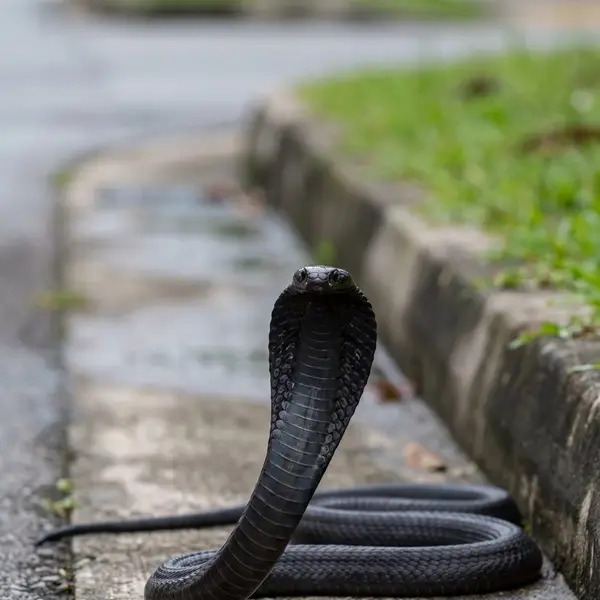 Equatorial spitting cobraNaja sumatranaDANGEROUS
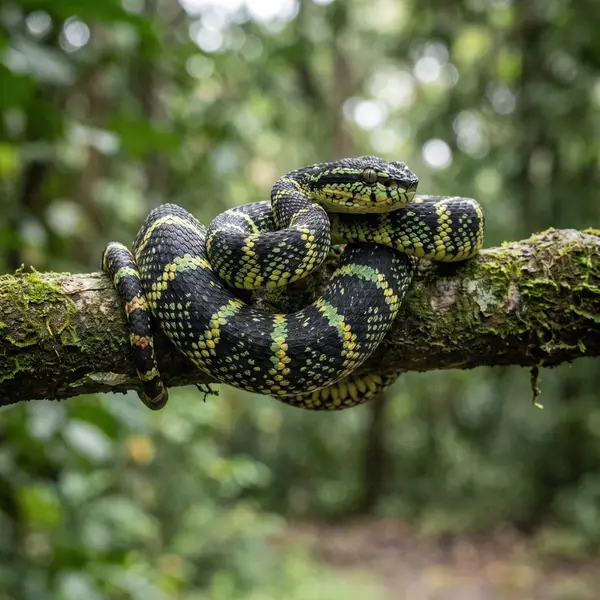 Wagler's pit viperTropidolaemus wagleriDANGEROUS
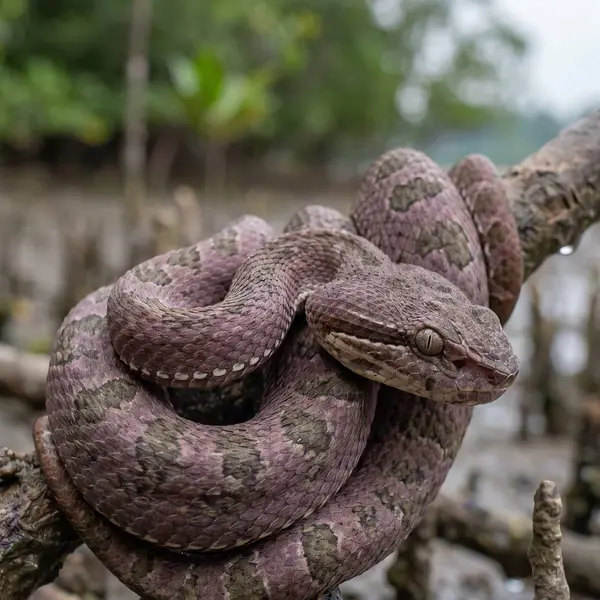 Shore pit viperTrimeresurus purpureomaculatusDANGEROUS
- Banded kraitBungarus fasciatusDANGEROUS
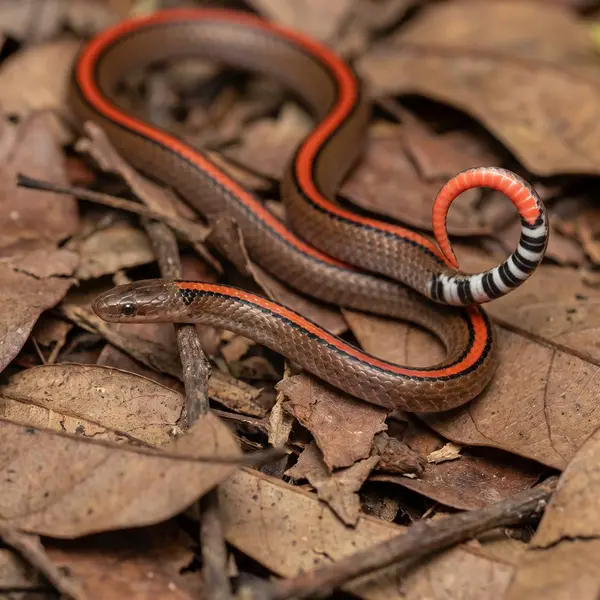 Banded Malayan coral snakeCalliophis intestinalisDANGEROUS
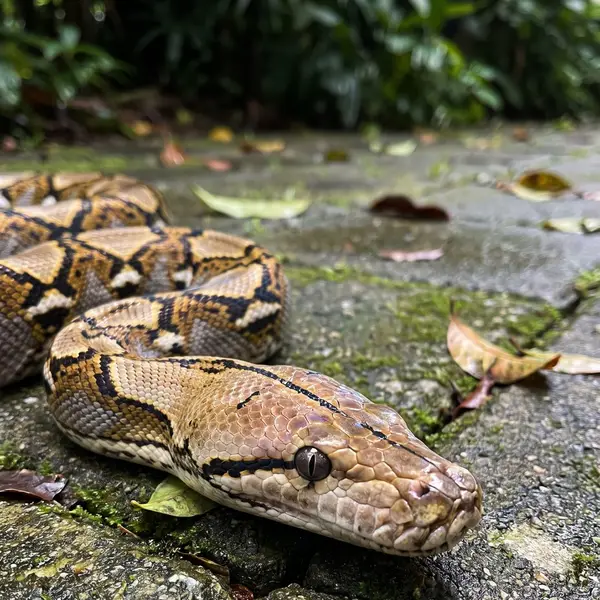 Reticulated pythonMalayopython reticulatusGIVE SPACE
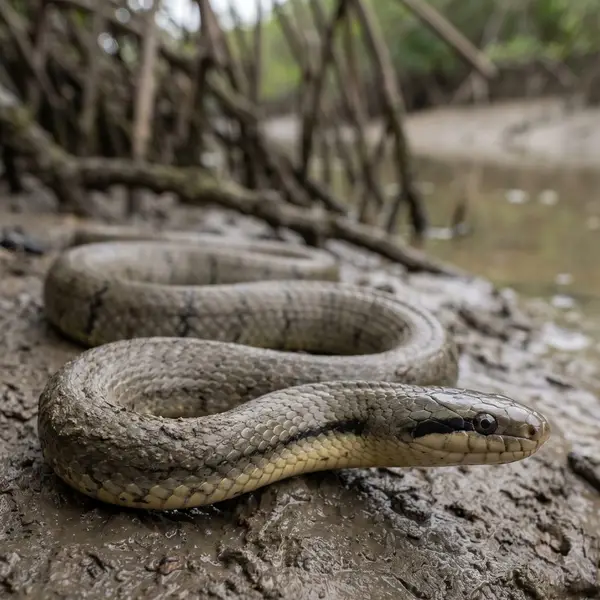 Dog-faced water snakeCerberus schneideriiGIVE SPACE
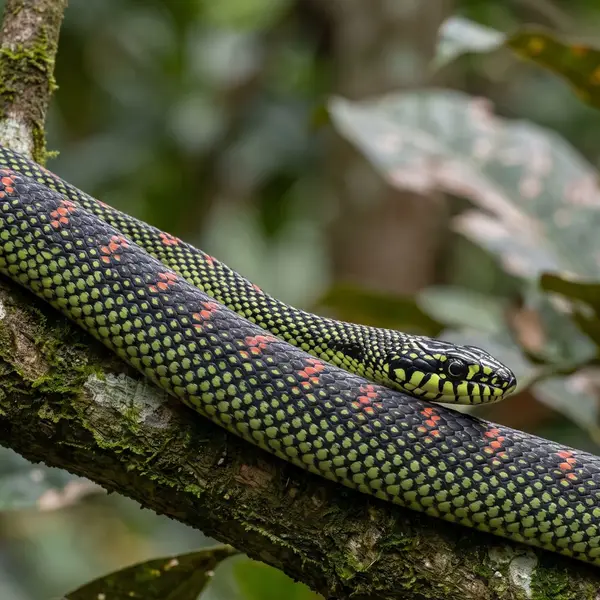 Paradise tree snakeChrysopelea paradisiGIVE SPACE
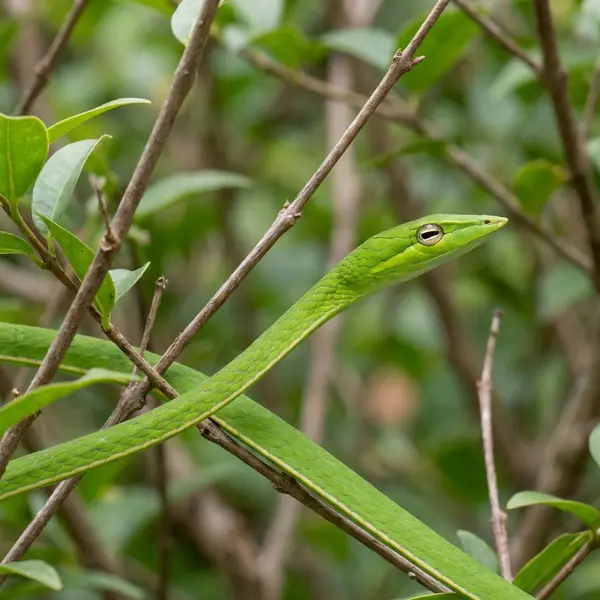 Oriental whip snakeAhaetulla prasinaGIVE SPACE
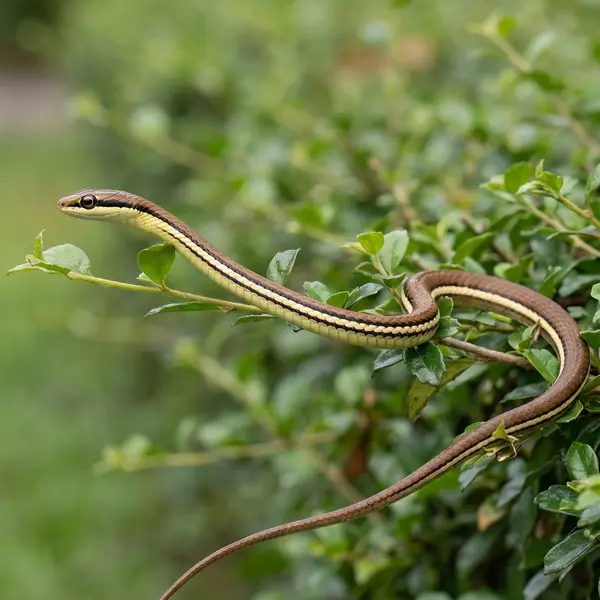 Painted bronzebackDendrelaphis pictusGIVE SPACE
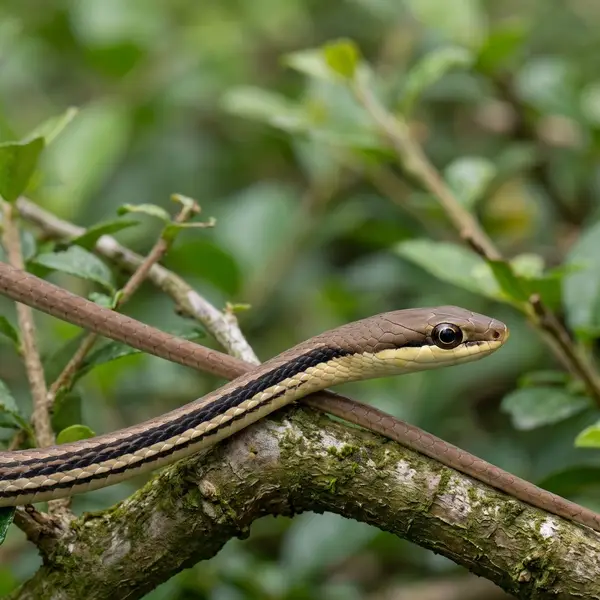 Striped bronzebackDendrelaphis caudolineatusGIVE SPACE
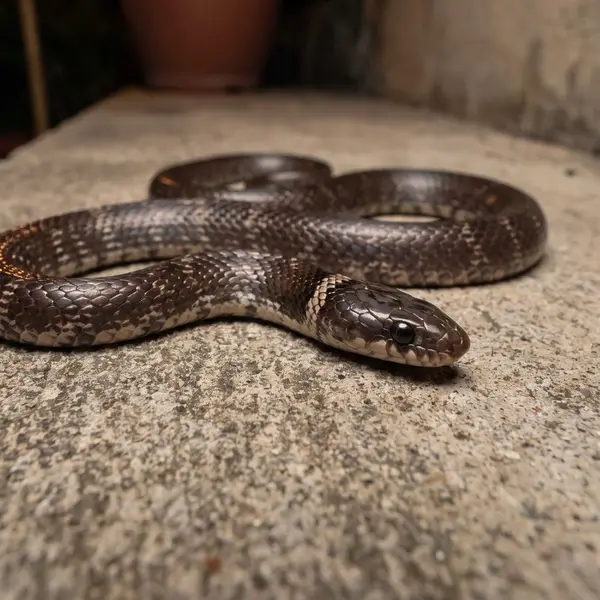 Common wolf snakeLycodon capucinusGIVE SPACE
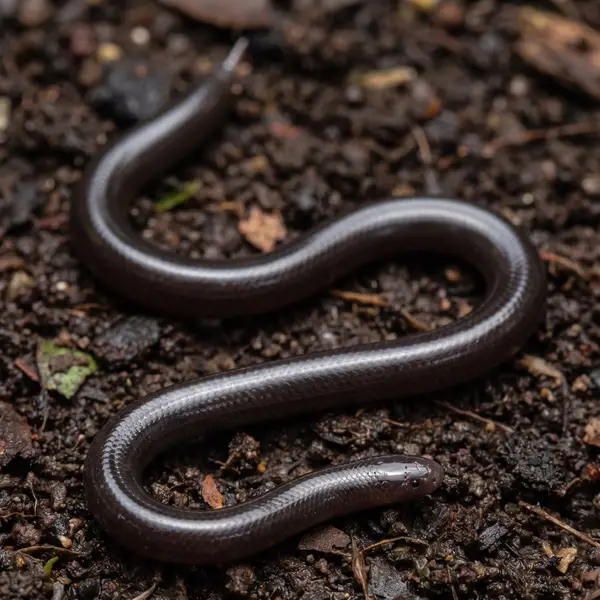 Brahminy blind snakeIndotyphlops braminusHARMLESS