
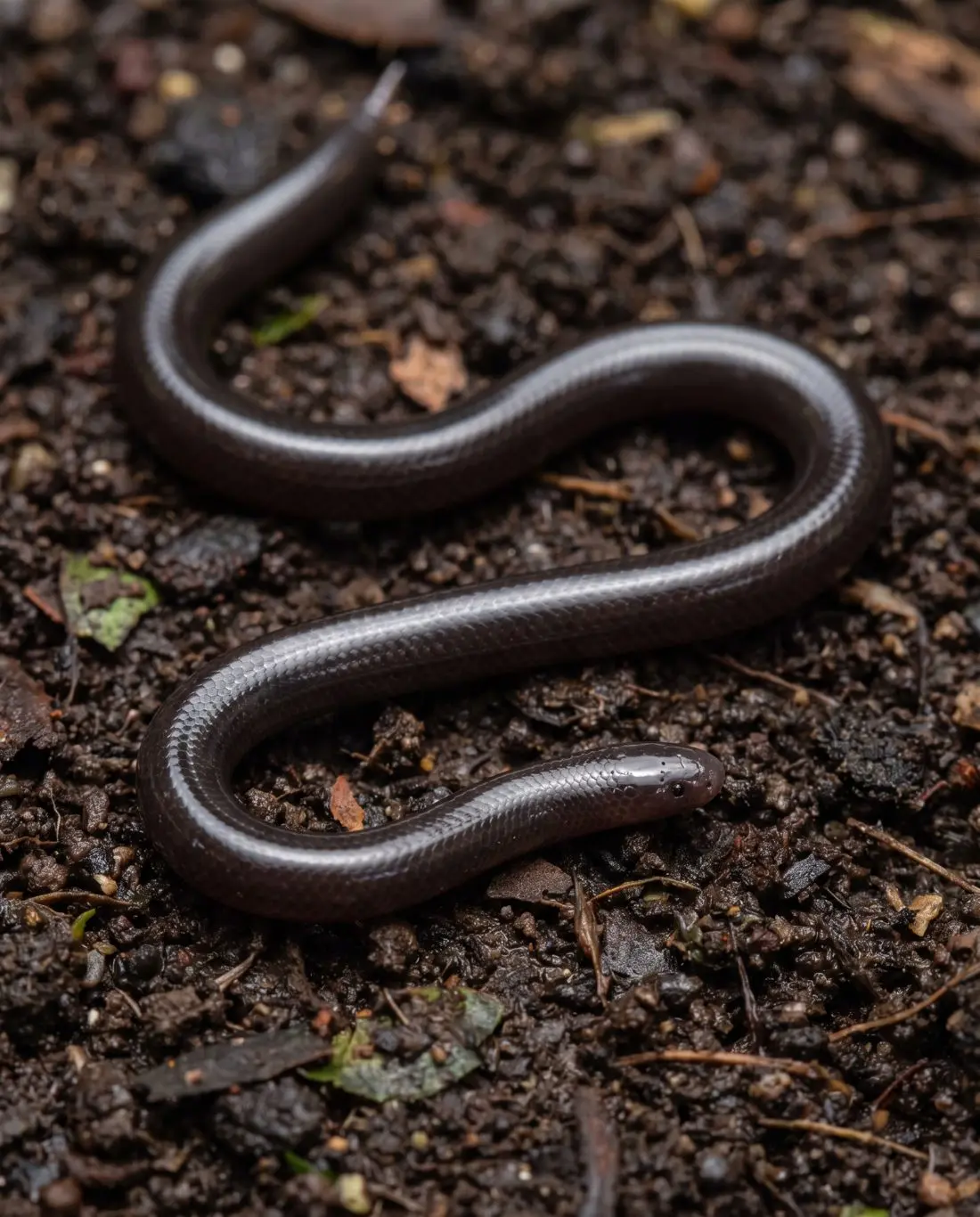
The Brahminy blind snake is one of the smallest snakes in Singapore and is often mistaken for an earthworm. It lives in soil and eats the young of ants and termites. It is completely harmless.
How to recognise it
It is tiny: most are under 15 cm long and about as thick as a matchstick. The body is shiny dark brown to black, the same thickness from end to end, with no rings or pattern. The head is blunt and rounded and is hard to tell apart from the tail.
The eyes are two tiny dark dots under the head scales. They can tell light from dark but cannot see shapes. The tail ends in a minute, harmless spine. Unlike an earthworm, it has smooth scales, moves in quick wriggles and flicks a small forked tongue.
Where it lives in Singapore
It is found almost everywhere in Singapore. Records come from the Botanic Gardens, Fort Canning, Marine Parade, Changi, Bukit Timah, housing estates and offshore islands such as St John's Island and Pulau Tekong.
It lives in loose soil, leaf litter, compost and potted plants. People usually see one when they repot a plant or after heavy rain floods its burrows.
It was first reported from Singapore in 1847, and Singapore's natural history museum holds specimens collected here as early as 1922. Few sightings get written down, even though it is very common, because it spends almost all its time out of sight.
What it eats
It feeds inside ant and termite nests, eating their eggs, larvae and pupae. Its small mouth suits this soft food. Being so small, it is itself food for other animals, including the sunbeam snake.
Behaviour
It spends most of its life underground. It comes to the surface mainly at night or when rain soaks the soil. When picked up it wriggles hard and may press its tail spine against your skin, but this cannot hurt you.
Life cycle
Every Brahminy blind snake ever studied has been female. It reproduces without males, so each young snake is a genetic copy of its mother. A female produces up to about eight young at a time.
It also has three sets of chromosomes instead of the usual two. A 2025 study of its genome describes it as the only snake known to be both all-female and triploid. One snake can start a new population, which is why it has spread in potted plant soil to at least 84 countries.
Is it dangerous?
No. It has no venom and its mouth is too small to bite a person. It is rated HARMLESS on the danger scale.
Frequently asked questions
Is the blind snake a worm or a snake?
It is a real snake. It has scales, a forked tongue and a backbone. Earthworms are soft, ringed and have no scales.
Is the Brahminy blind snake poisonous?
No. It has no venom and cannot bite people. It is completely harmless.
Why is it called a flowerpot snake?
It lives in soil and has spread around the world in the soil of potted plants.
Can a blind snake see?
Only a little. Its tiny eyes sit under the head scales and can tell light from dark, but cannot see shapes.
Are all Brahminy blind snakes female?
Yes, as far as anyone knows. They reproduce without males, and each young snake is a copy of its mother.
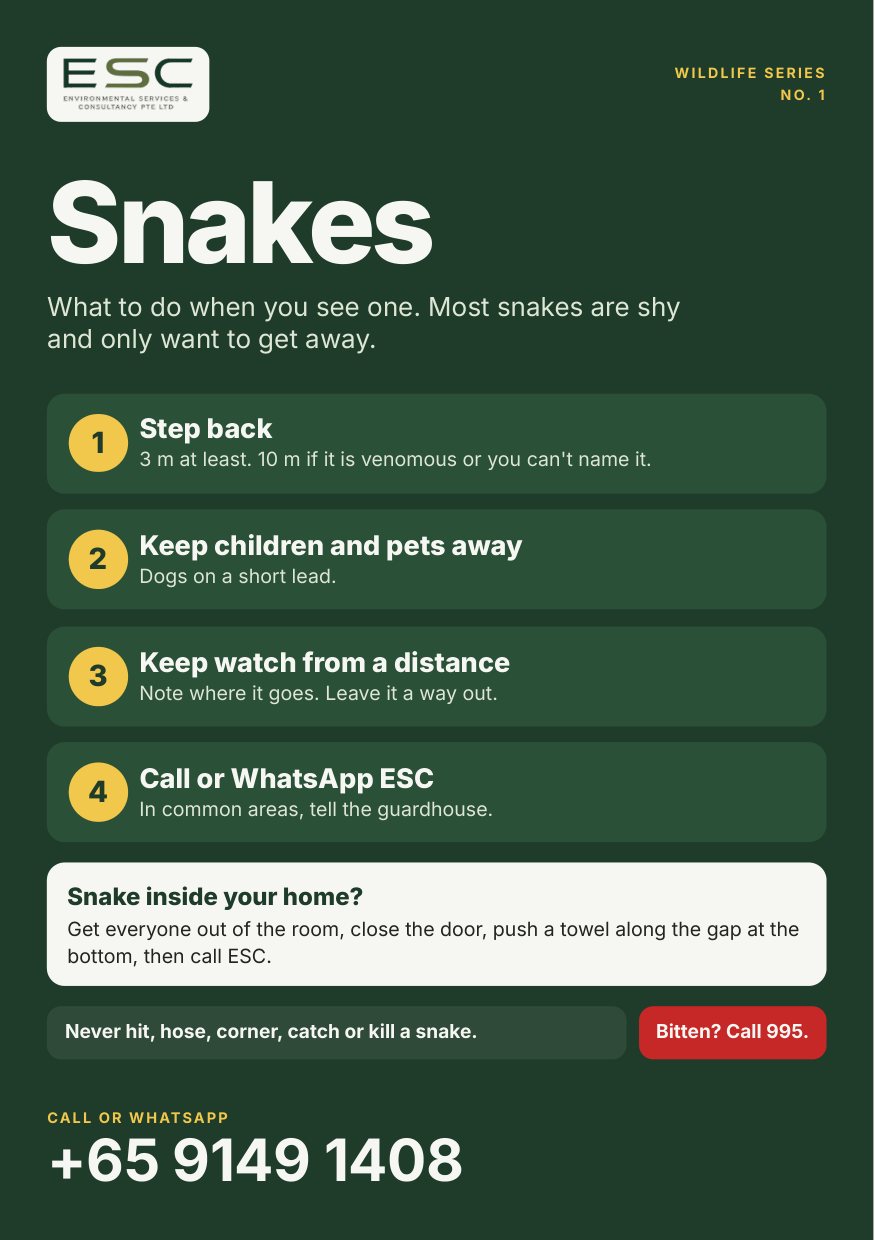
More snakes in Singapore
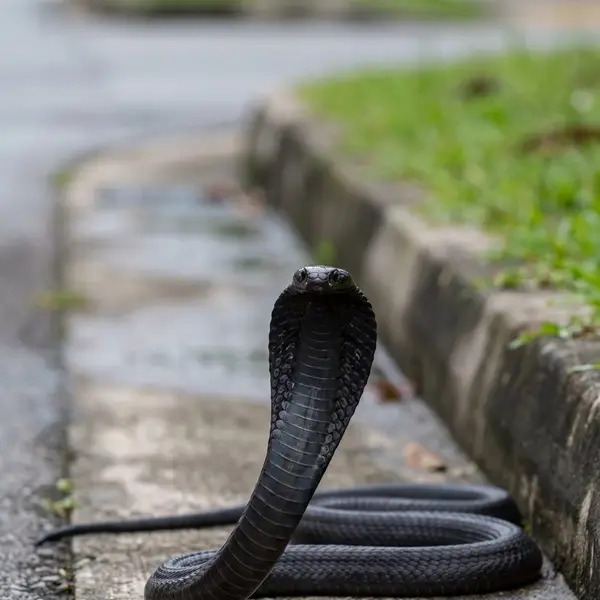 Equatorial spitting cobraNaja sumatranaDANGEROUS
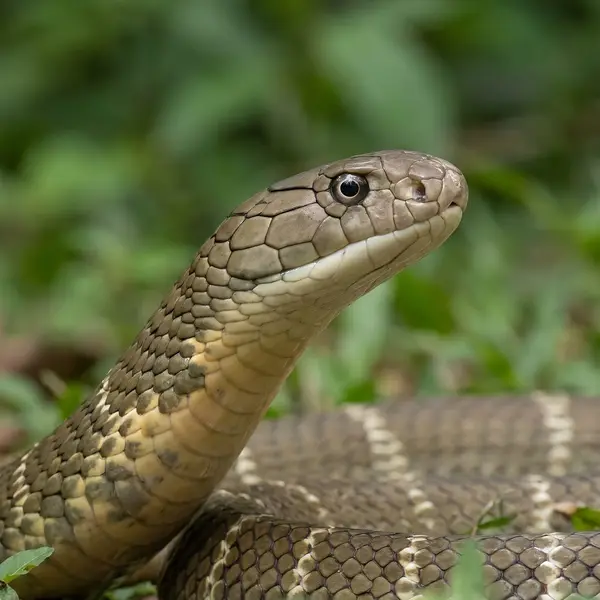 King cobraOphiophagus bungarusDANGEROUS
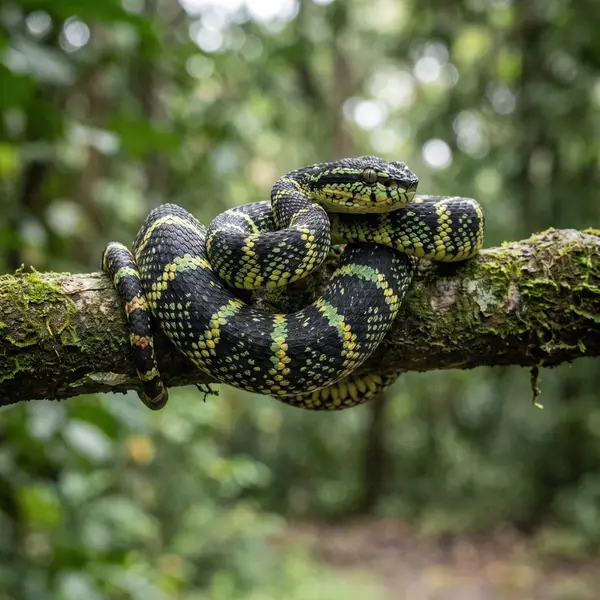 Wagler's pit viperTropidolaemus wagleriDANGEROUS
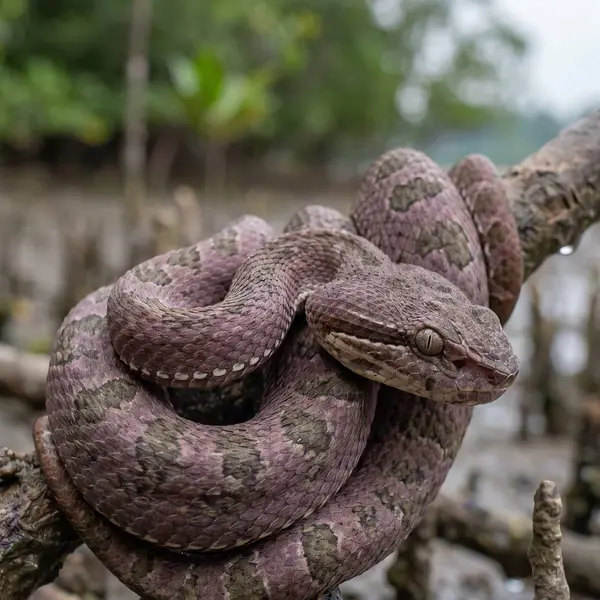 Shore pit viperTrimeresurus purpureomaculatusDANGEROUS
- Banded kraitBungarus fasciatusDANGEROUS
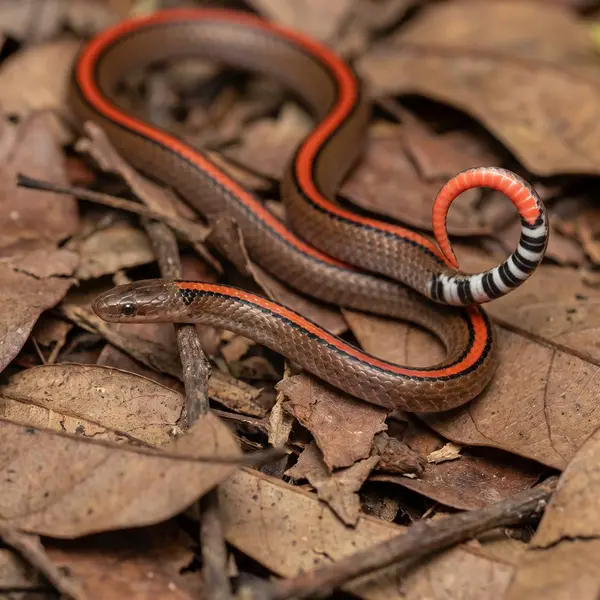 Banded Malayan coral snakeCalliophis intestinalisDANGEROUS
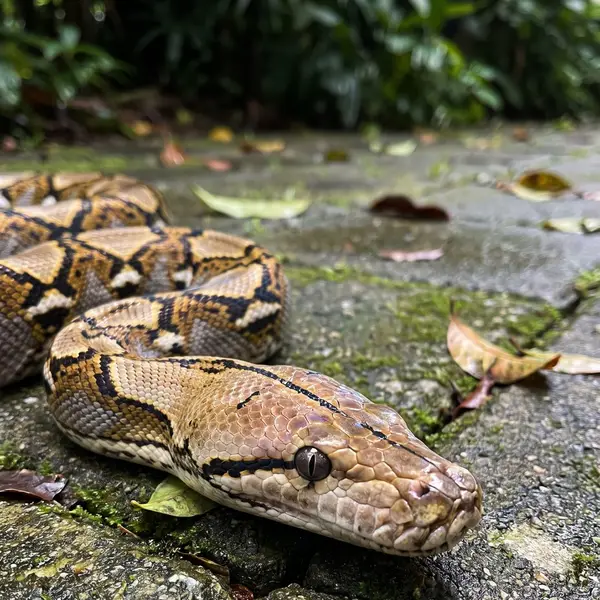 Reticulated pythonMalayopython reticulatusGIVE SPACE
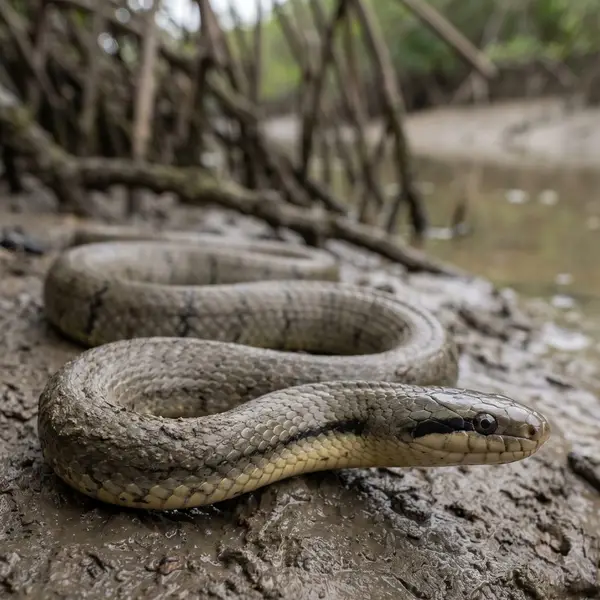 Dog-faced water snakeCerberus schneideriiGIVE SPACE
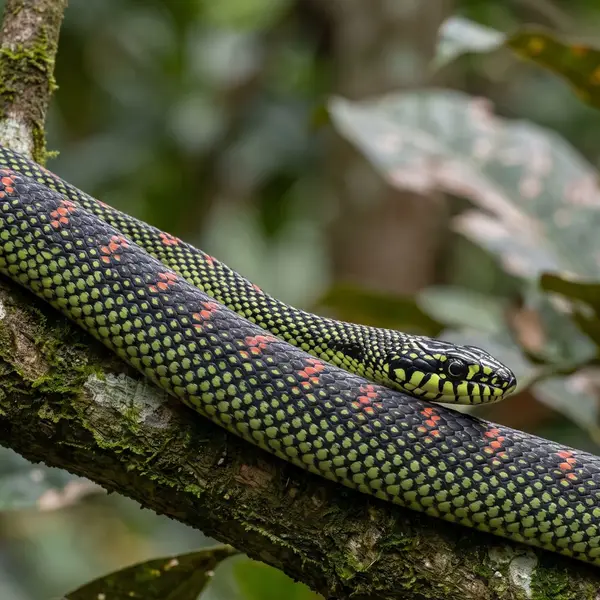 Paradise tree snakeChrysopelea paradisiGIVE SPACE
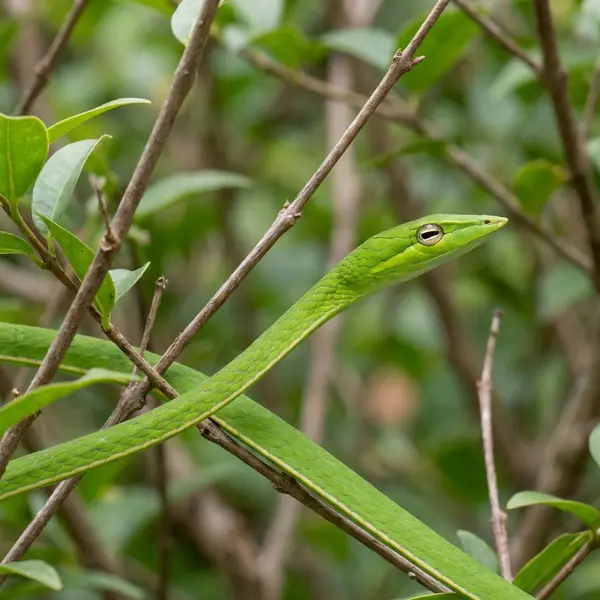 Oriental whip snakeAhaetulla prasinaGIVE SPACE
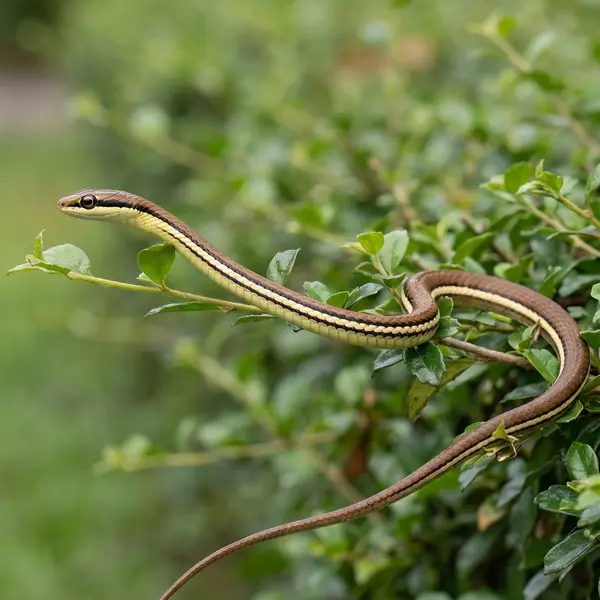 Painted bronzebackDendrelaphis pictusGIVE SPACE
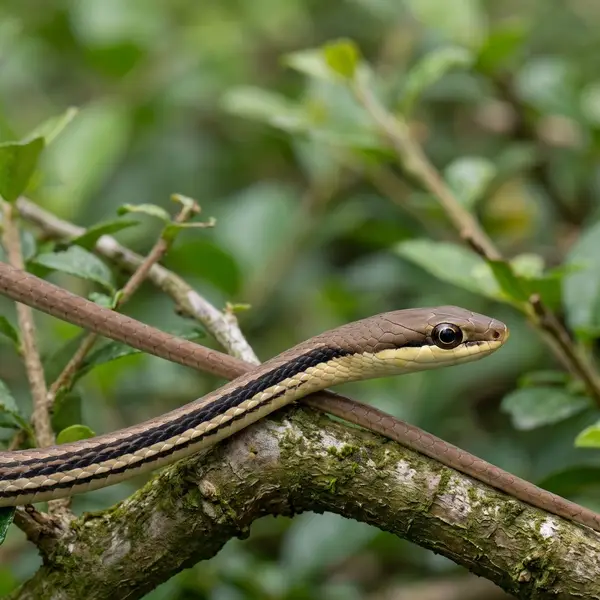 Striped bronzebackDendrelaphis caudolineatusGIVE SPACE
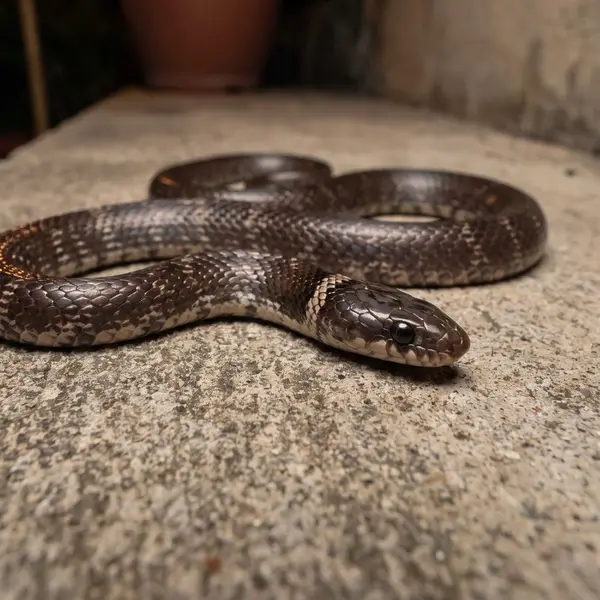 Common wolf snakeLycodon capucinusGIVE SPACE