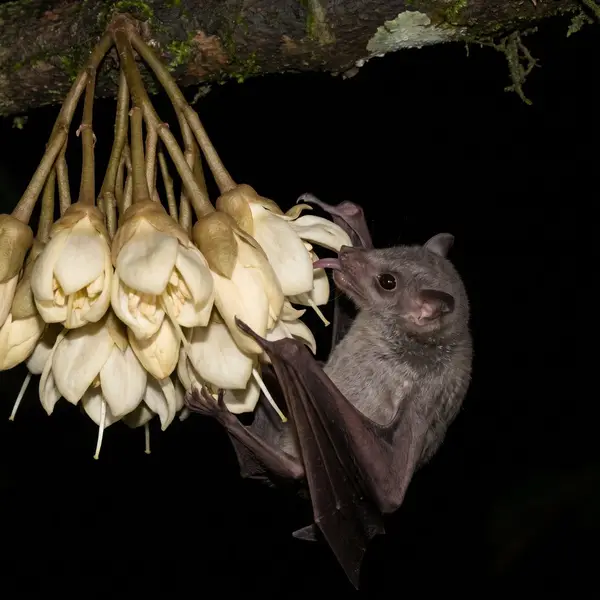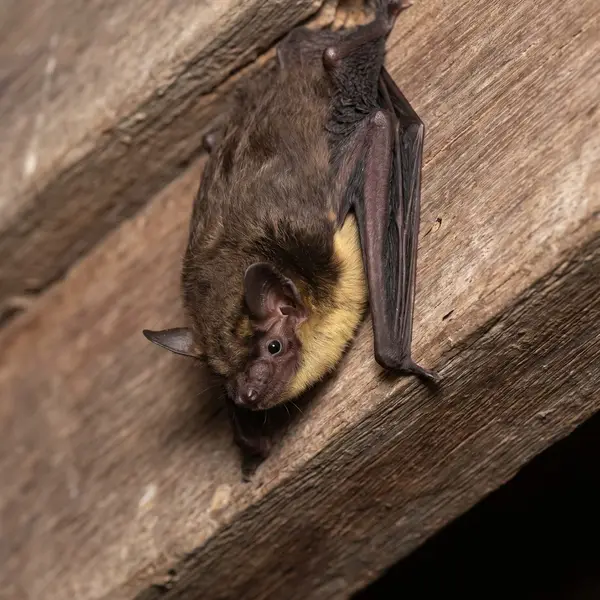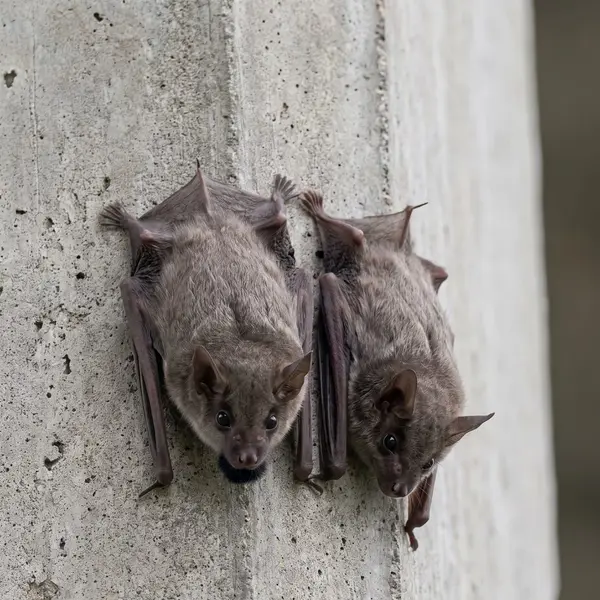
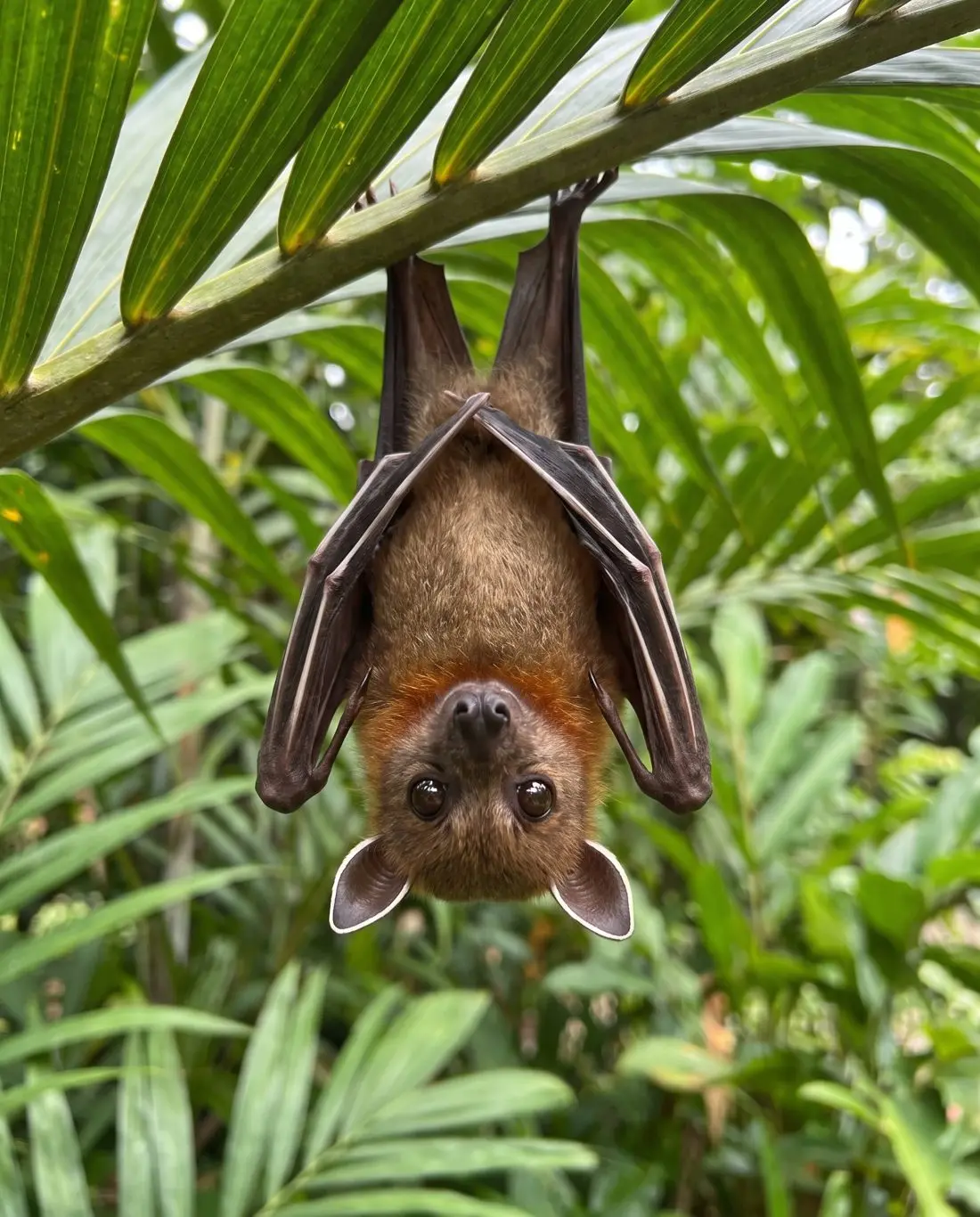
The lesser dog-faced fruit bat (Cynopterus brachyotis) is the fruit bat you are most likely to see in Singapore. It is a small, palm-sized bat with a dog-like face, big dark eyes and neat white edges on its ears. It lives right alongside us, roosting in garden palms and ferns and feeding at fruit trees in housing estates.
How to recognise it
This is a small fruit bat. Its forearm measures about 6 to 7 cm and it weighs about 30 to 40 g. Hanging with its wings folded, it is roughly the size of an adult's palm.
The fur is brown to yellowish brown, paler underneath. Adults have a brighter collar of fur around the neck and shoulders. In males the collar is dark orange or reddish. In females it is yellowish. Young bats may show only a faint collar.
The best field marks are the white edges on the ears and the pale lines along the finger bones of the wings. It has a short, dog-like muzzle, large dark eyes and a very short tail. Like most fruit bats, it has a small claw on its second finger as well as on its thumb.
Where it lives in Singapore
It is native, widespread and common, and it copes well with city life. It is found in housing estates, condo gardens, parks, roadside trees and forest edges across the island.
By day it roosts in groups under palm fronds, in bird's nest ferns and other epiphytic ferns, and in leafy tree crowns. It also uses sheltered spots on buildings such as porches. Young males may roost on their own.
What it eats
It eats mainly ripe fruit, with some nectar and pollen. Plants recorded in its diet in Singapore include chiku, mango, rambutan, guava, banana, sugar-apple, figs and durian. It favours sweet, aromatic fruit.
It chews fruit to squeeze out the juice and soft flesh, then drops the dry, fibrous remains. That is why fruit scraps often collect under a feeding spot. Because it often carries fruit away from the tree before eating, it drops seeds in new places and helps plants spread in parks and along forest edges.
Behaviour and leaf tents
This bat can build its own shelter. It chews through the veins of a large leaf or palm frond until the leaf folds down like an umbrella, leaving a dark, dry space underneath. In Peninsular Malaysia, males build most of these tents and share them with their group of females. In Singapore in 2016, two bats, one shielding a pup, were found under the chewed and drooping crown of an ornamental plant, thought to be a dragon blood tree, in a condo car park planter along Upper Thomson Road.
It leaves the roost at dusk and finds food mainly by smell and sight. It does not echolocate with its voice like insect bats do, but research in Thailand showed that it makes clicking sounds with its wings that work as a simple sonar in the dark. Recorded predators in Singapore include paradise tree snakes, Wagler's pit vipers, crested goshawks and house crows.
Life cycle
It lives in harems, with one adult male roosting with a group of females. In Singapore, males have been photographed with harems of 8 females under a palm frond and 20 females inside a bird's nest fern. In Malaysia it is not tied to one fixed breeding season, and many females give birth twice a year. Pregnancy lasts about 3.5 to 4 months, and a female usually has a single pup, which clings to her while she roosts. Females can breed from about 6 to 8 months old. Males take about a year to mature.
Although it is still common, a 2019 National University of Singapore study that compared museum specimens from 1931 with bats sampled in 2011 and 2012 found that the genetic diversity of Singapore's population has fallen sharply.
Is it dangerous?
It is not aggressive and does not attack people. Like any wild bat, it will bite to defend itself if it is grabbed, and its small, sharp teeth can break the skin. Singapore has been free of rabies since 1953, and no bat here has been found with rabies.
Frequently asked questions
Is the lesser dog-faced fruit bat common in Singapore?
Yes. It is the most common fruit bat in Singapore and is widespread, even in housing estates and condo gardens with palms and fruit trees.
How big is a lesser dog-faced fruit bat?
It is palm-sized. The forearm measures about 6 to 7 cm and it weighs about 30 to 40 g.
How can you tell a male from a female?
Look at the collar of brighter fur around the neck. Adult males have a dark orange or reddish collar, while adult females have a yellowish one.
Do fruit bats in Singapore make tents?
Yes. This species chews the veins of large leaves or palm fronds so they fold down into a shelter. In 2016, bats were found roosting under a chewed, drooping ornamental plant at a condo along Upper Thomson Road.
Is the lesser dog-faced fruit bat dangerous?
No. It does not attack people and bites only if it is grabbed or handled. Singapore has been rabies-free since 1953.