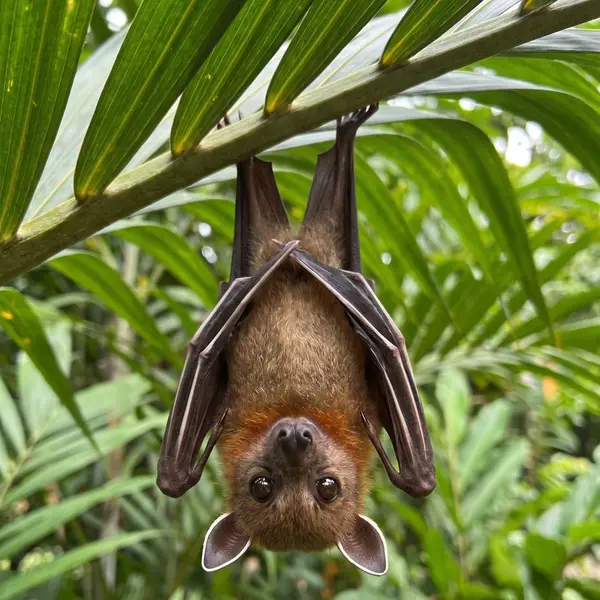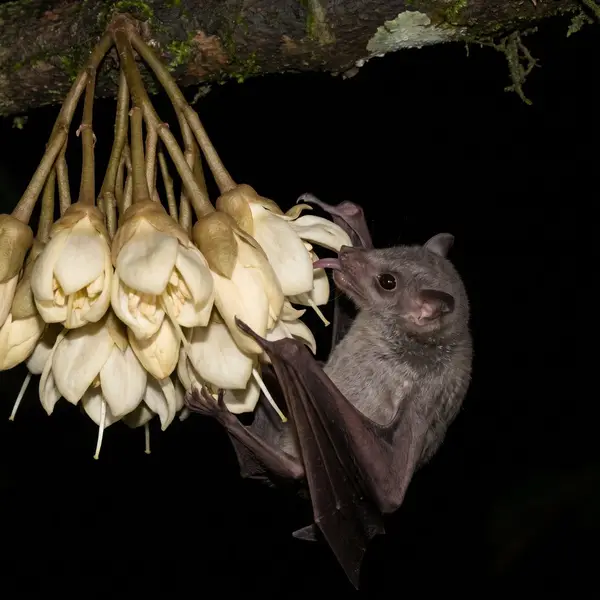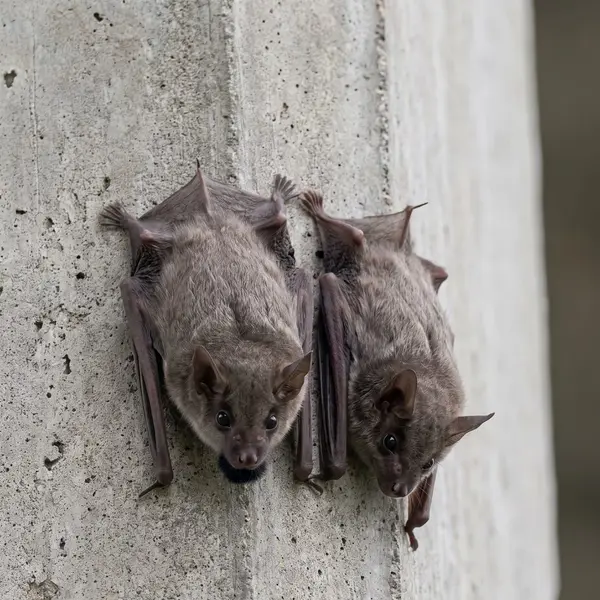
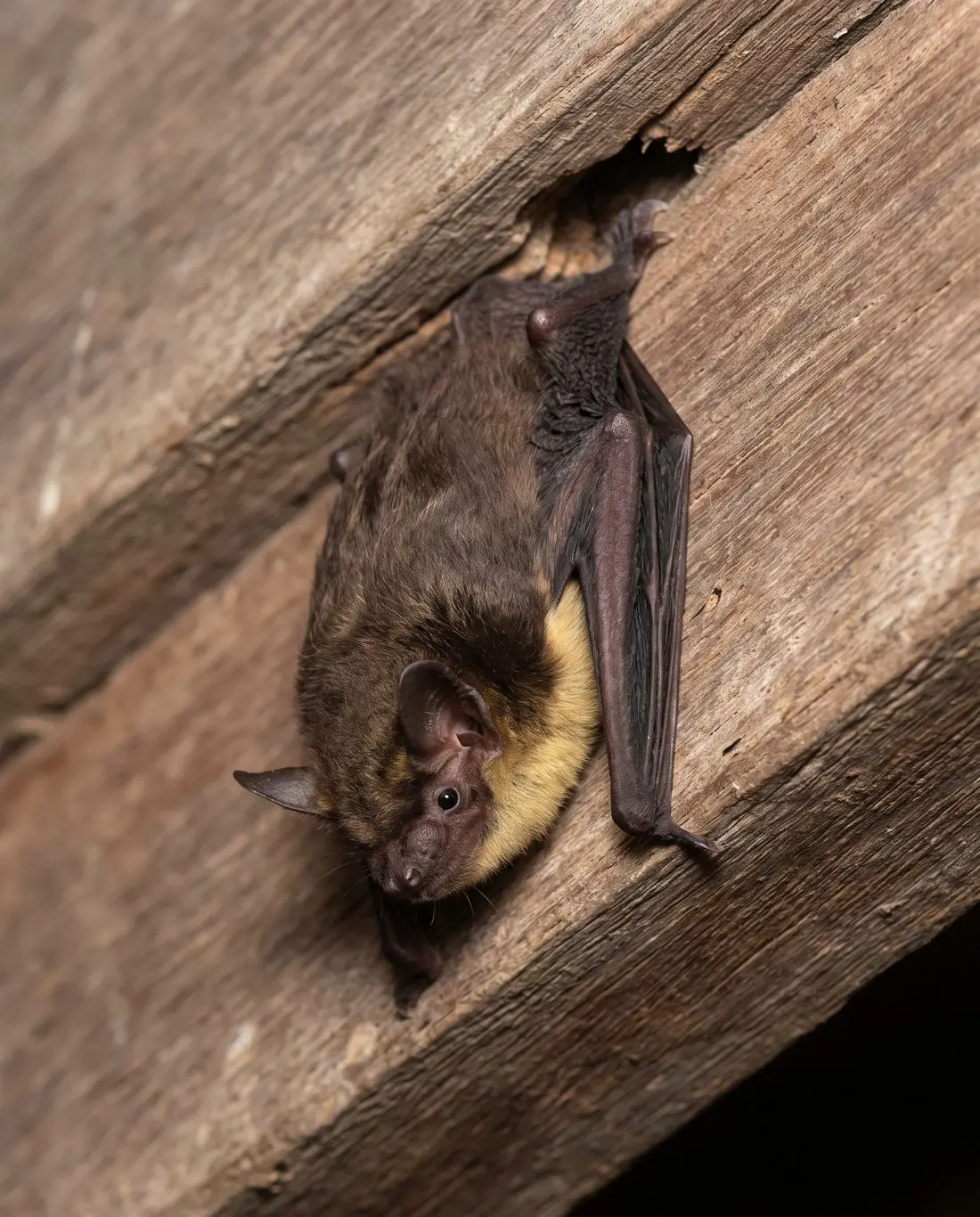
The lesser Asiatic yellow house bat (Scotophilus kuhlii) is a small, stocky insect bat that has taken well to towns. It is one of the bats most often found roosting in roof spaces and old buildings in Singapore. At dusk it heads out to catch beetles, moths and termites on the wing.
How to recognise it
This is a small, sturdy insect bat with a blunt, dog-like muzzle. Its head and body measure about 7 cm, its forearm 4.4 to 5.5 cm, and it weighs up to about 22 g.
The back is brown to beige, and the belly is paler, often with a yellowish or buff tone. The fur is short, dense and very soft. The ears are pointed, with a crescent-shaped tragus, the small flap that stands up inside the ear. The eyes are small, the wings are dark brown, and the tail is fully enclosed in the skin membrane between the hind legs.
It has a larger cousin, the greater Asiatic yellow house bat, found in other parts of Asia. The two look alike and are told apart mainly by size.
Where it lives in Singapore
It is native, widespread and common. It has adapted well to towns and is often seen hunting over housing estates, roads, open fields and water at dusk.
In natural habitat it roosts in tree hollows and among palm fronds. In towns it often uses roof spaces, attics and old buildings. In Singapore, bats have been seen leaving the roof space of an old building in Changi, coming and going through small gaps beneath the roof tiles. Roosts can hold anything from a few bats to several hundred.
What it eats
It is an insect eater that catches its prey in flight. Its diet includes beetles, moths, termites and other flying insects. It often hunts early in the evening and can fly quite low to the ground, so it is one of the bats people notice flitting over open spaces at dusk.
Behaviour
Like other insect bats, it hunts by echolocation. It sends out high-pitched calls and listens for the echoes that bounce back from insects and obstacles. Most of these calls are too high for people to hear.
A study of palm-roosting colonies in Taiwan found that these bats switched roosts every two to three days, often moving back to roosts they had used before at the same site. In Singapore, the paradise tree snake has been recorded preying on it.
Life cycle
Its breeding has not been studied in detail in Singapore. A study in northern India reported that females breed once a year and raise their young in the same buildings they use as day roosts. Those buildings stayed warmer and more stable than the outside air.
Is it dangerous?
It does not attack people. Like any wild bat, it may bite if it is picked up. Its droppings are dry and crumble easily, and a large build-up in an enclosed roof space can create dust that is unhealthy to breathe. Singapore has been free of rabies since 1953, and no bat here has been found with rabies.
Frequently asked questions
What bat lives in roofs in Singapore?
The lesser Asiatic yellow house bat is one of the bats most often found in roof spaces, attics and old buildings in Singapore. It can enter through small gaps beneath roof tiles.
Is the yellow house bat actually yellow?
Only partly. Its back is brown to beige, while its belly is paler and often has a yellowish or buff tone.
What does the yellow house bat eat?
Flying insects such as beetles, moths and termites, which it catches in mid-air using echolocation.
How big is the lesser Asiatic yellow house bat?
It is small. The head and body measure about 7 cm and it weighs up to about 22 g.
Is the yellow house bat dangerous?
No. It does not attack people and bites only if picked up. Singapore has been rabies-free since 1953.